Maike
AI-Powered Citizen Development Platform
March 2024 - June 2024
Role
Lead Product Designer
Client
BP (Incubation)
Scope
Could AI let staff build their own tools, saving the cost of a product team?
Outcome
Employees prototyping and validating their own ideas, no product teams required
Summary
From prototype to a community that wouldn't let go
Maike was an AI platform that enabled non-technical BP employees to create their own tools without needing a development team.
When I joined, it was functional but felt more like a developer experiment. My goal was to make it feel trustworthy and accessible. I developed a compact design system, worked on generative UI that transformed raw AI outputs into familiar formats and components, and contributed to shaping a platform that was LLM-agnostic and multimodal, supporting text, documents, images, audio, and video.
The primary focus was always on making powerful tools approachable. We built a community around Maike through weekly calls, onboarding sessions, and a Teams channel with over 100 members. Even after the incubation team was stood down, BP continued to operate Maike, with the community actively contributing to its development.
The Challenge
Maike had generated interest but felt like a developer experiment. Without stronger foundations, it risked being seen as a technical curiosity rather than a credible tool. My role was to give it a cohesive design identity and make it approachable for people who'd never used developer tools.
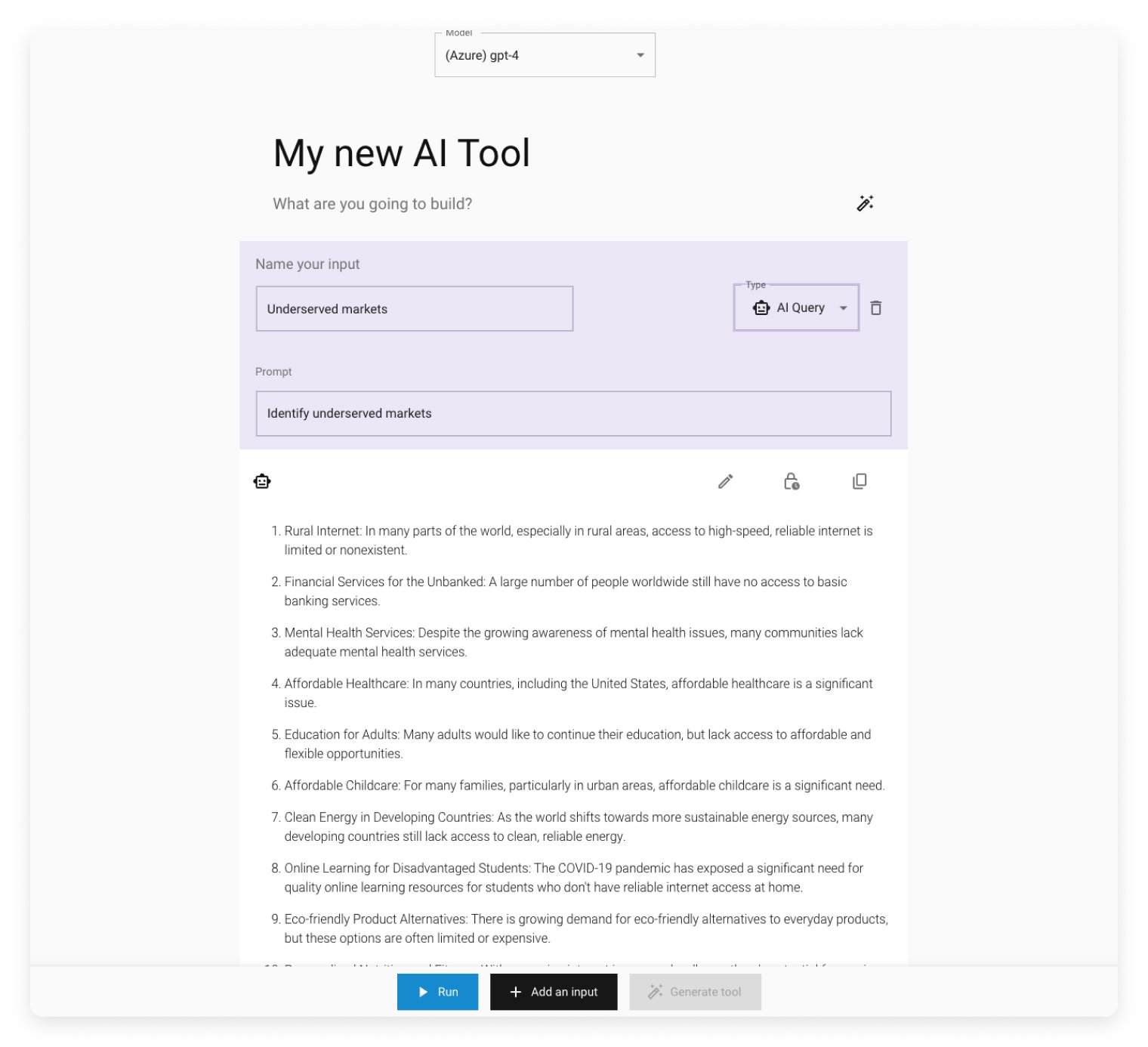
The product, when I joined, was functional but unpolished. No design system, no visual identity.
Making AI Approachable
Generative AI was gaining popularity, but it felt clunky at the time. Maike was trying to go beyond a conversational interface. I designed a set of components that could format raw AI outputs into familiar forms, fields, and previews. User testing confirmed that showing what was happening behind the scenes made people trust the results more than instant answers.
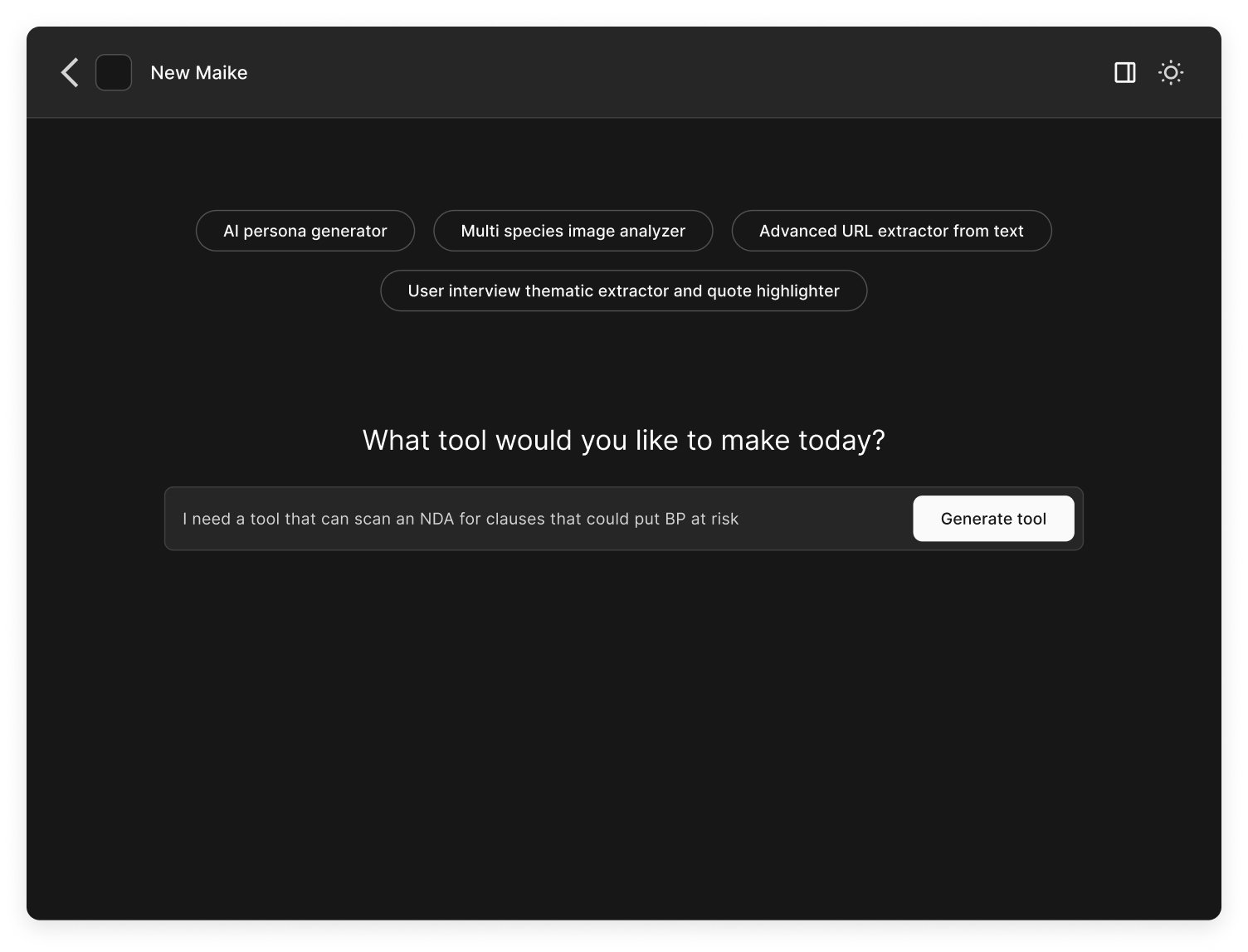
Prompt suggestions helped users get started.
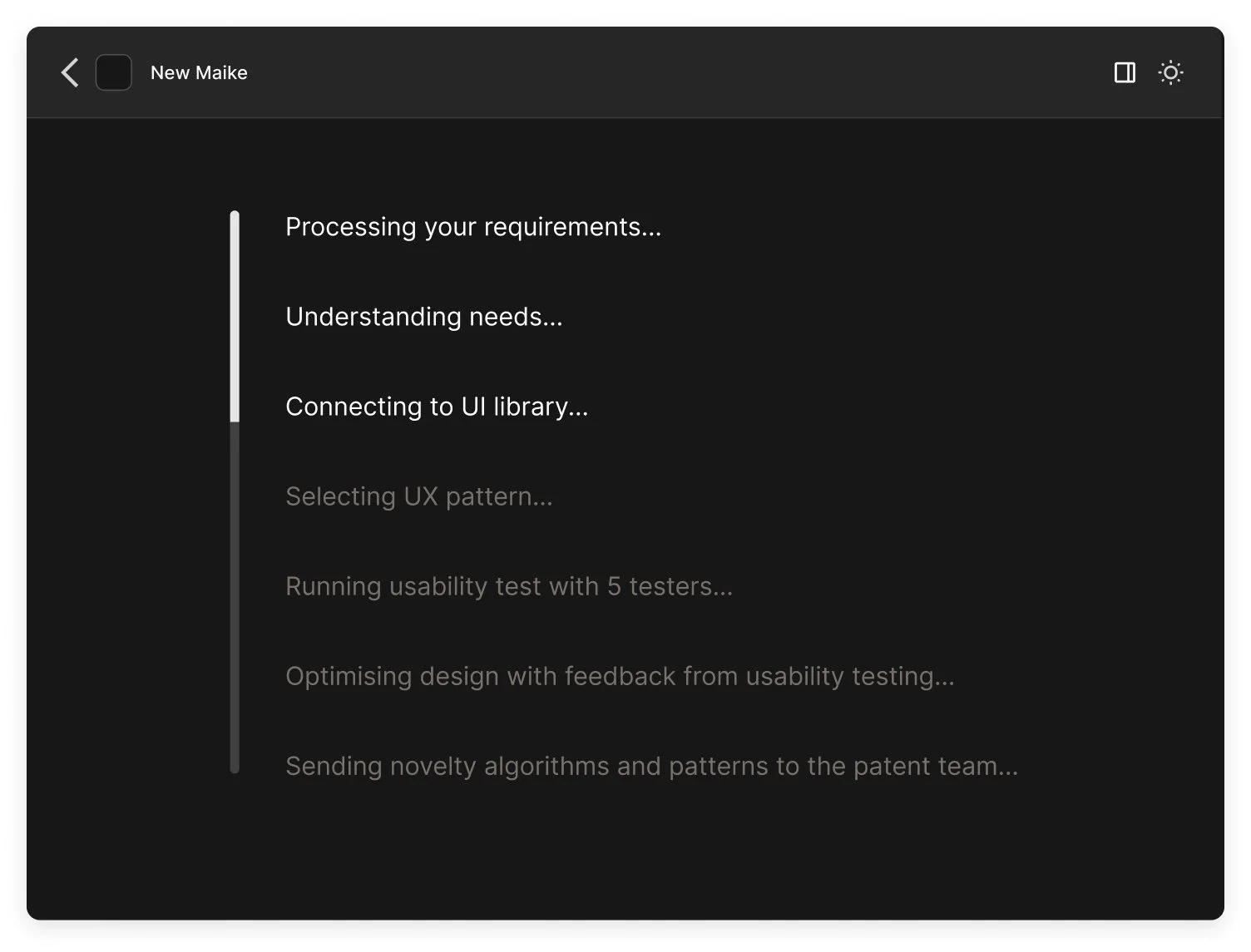
Showing the build process helped them trust the results.
Flexibility by Design
The platform was designed to be LLM-agnostic and multimodal. Users could switch between models depending on their use case, and bring in text, documents, images, audio, and video; each input type felt consistent and approachable.
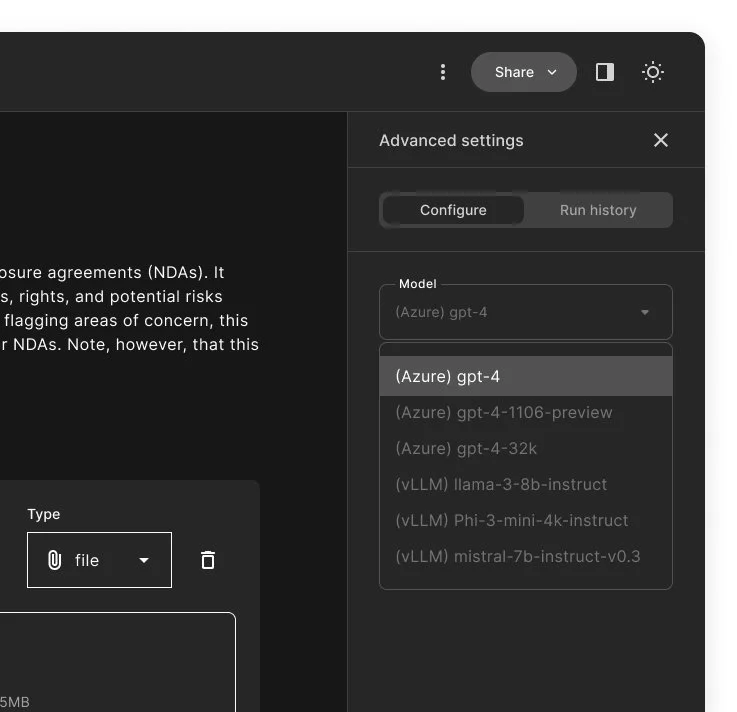
Users could switch between models depending on their use case — Azure GPT-4, Llama, Mistral, and more.
Generative UI
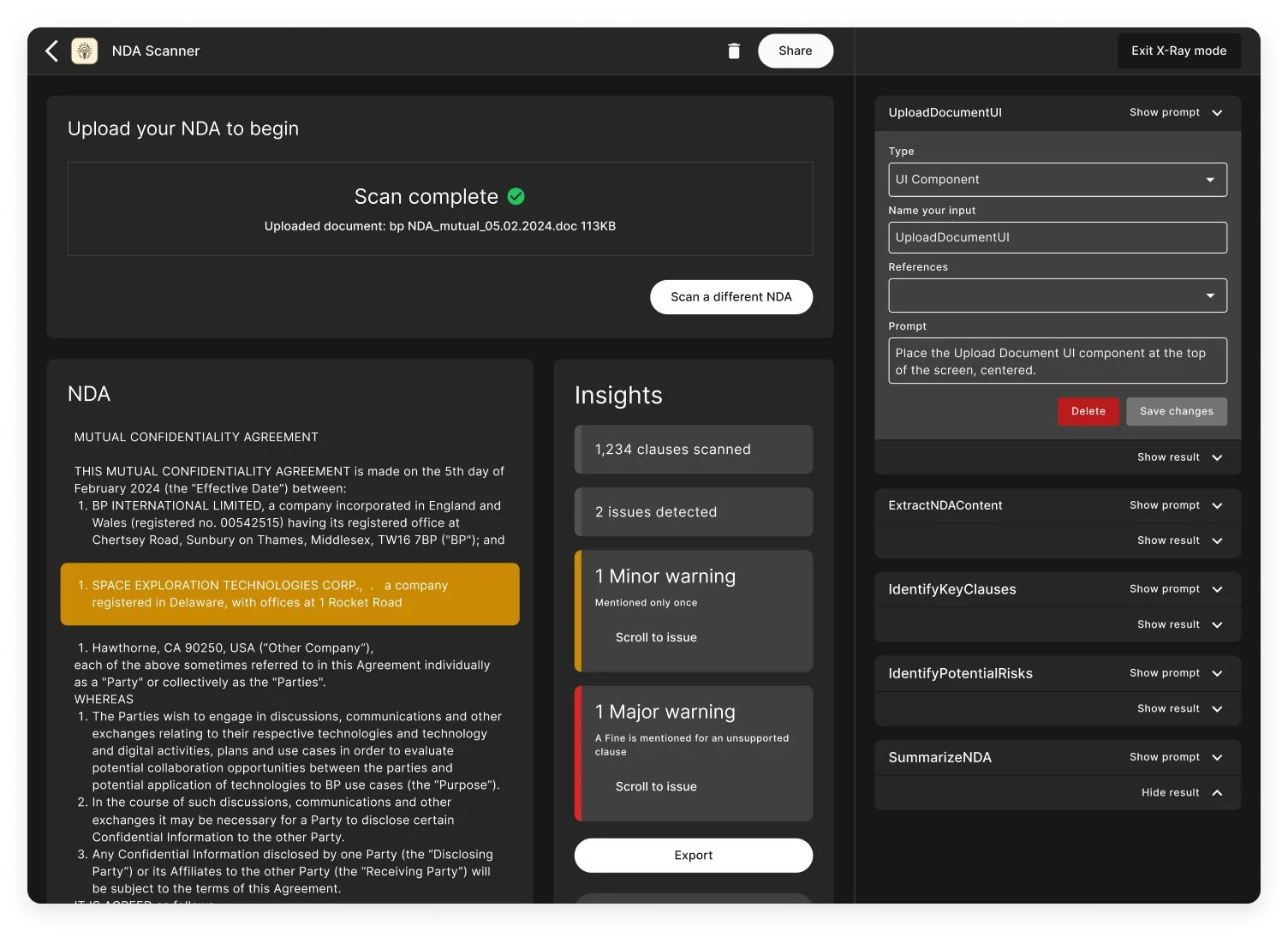
A complete tool generated from a single prompt — upload, scan, review results.
Towards the end of my time on Maike, we introduced generative UI, which the platform could create complete interfaces from a single prompt. Users could publish tools company-wide in editable or run-only modes, leading to truly no-code tool creation.
Building a Community
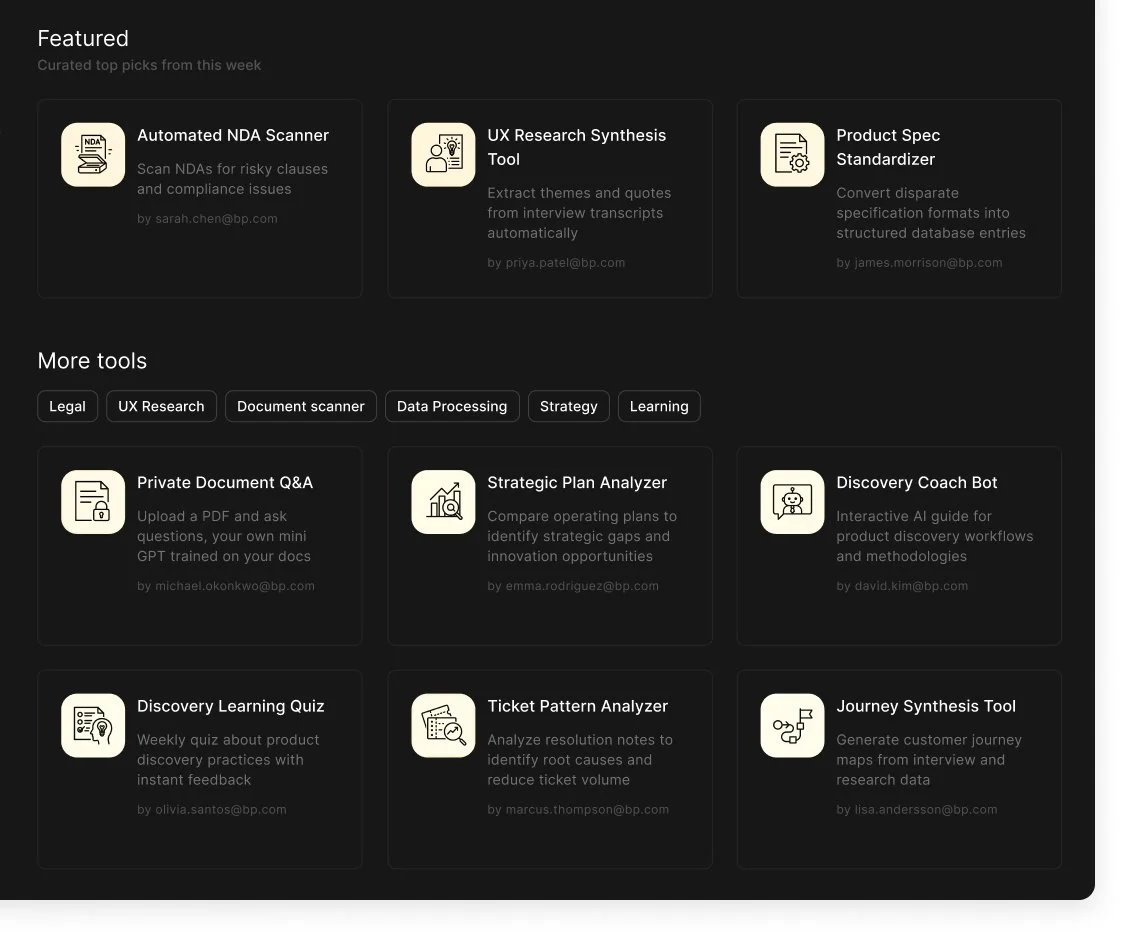
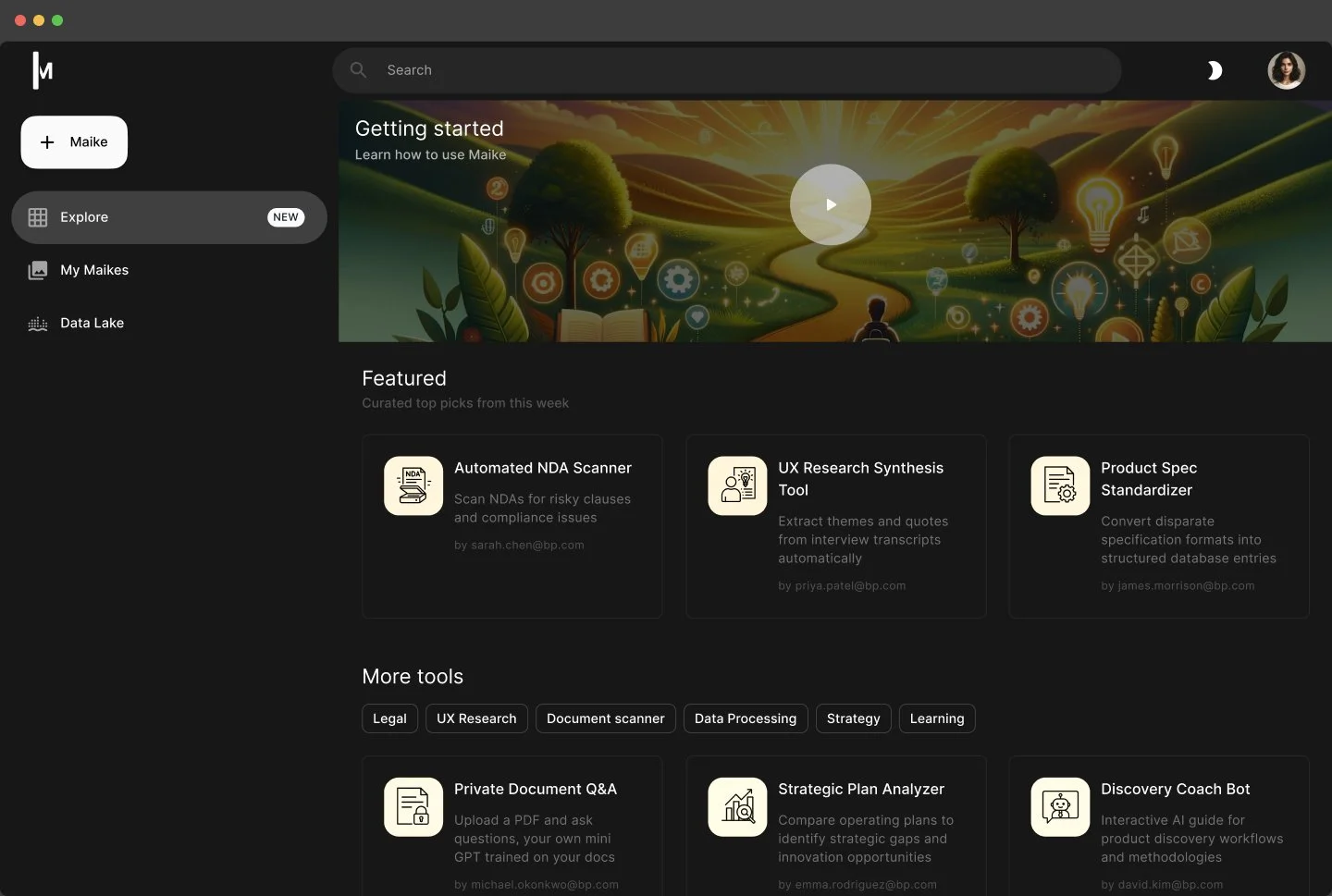
Tools built by the community spanned legal, UX research, data processing, and strategy.
We didn't just release Maike, we built a feedback loop. A Teams channel grew to 100+ members, with weekly calls drawing around 50 participants. A dozen power users built tools daily. When the incubation team was stood down, the community kept going.
Outcomes
100+
community members
12
Power users building daily
50
Weekly call participants
12+
Months active after the team stood down
Reflection: Adoption comes from clarity, not hype. By grounding the tool in approachable interfaces and building an engaged community, we showed how design can turn cutting-edge AI from a concept into practical, day-to-day value.