
Dynamo
Digital Permit to Work Platform
Digitising the process that gets people home safe.
Role
Lead Product Designer
Scope
Delivering for today’s customers while building foundations for tomorrow’s.
Outcome
Features that shipped: self-service admin, scalable maps, offline mode, SOS alerts.
Summary
Dynamo digitises BP's paper-based Permit to Work process, the system that ensures field engineers, technicians, and vessel workers can do their jobs safely. When I joined, the platform was live across Retail, Wind, and Shipping, but couldn't scale beyond bespoke deployments. I was brought in to change that.
The Challenge
Each customer had a different version of the platform. Navigation was fragmented, maps showed hundreds of assets with no hierarchy, and all user management required manual intervention. The goal was commercialisation, but the platform couldn't support new customers without rebuilding from scratch each time.
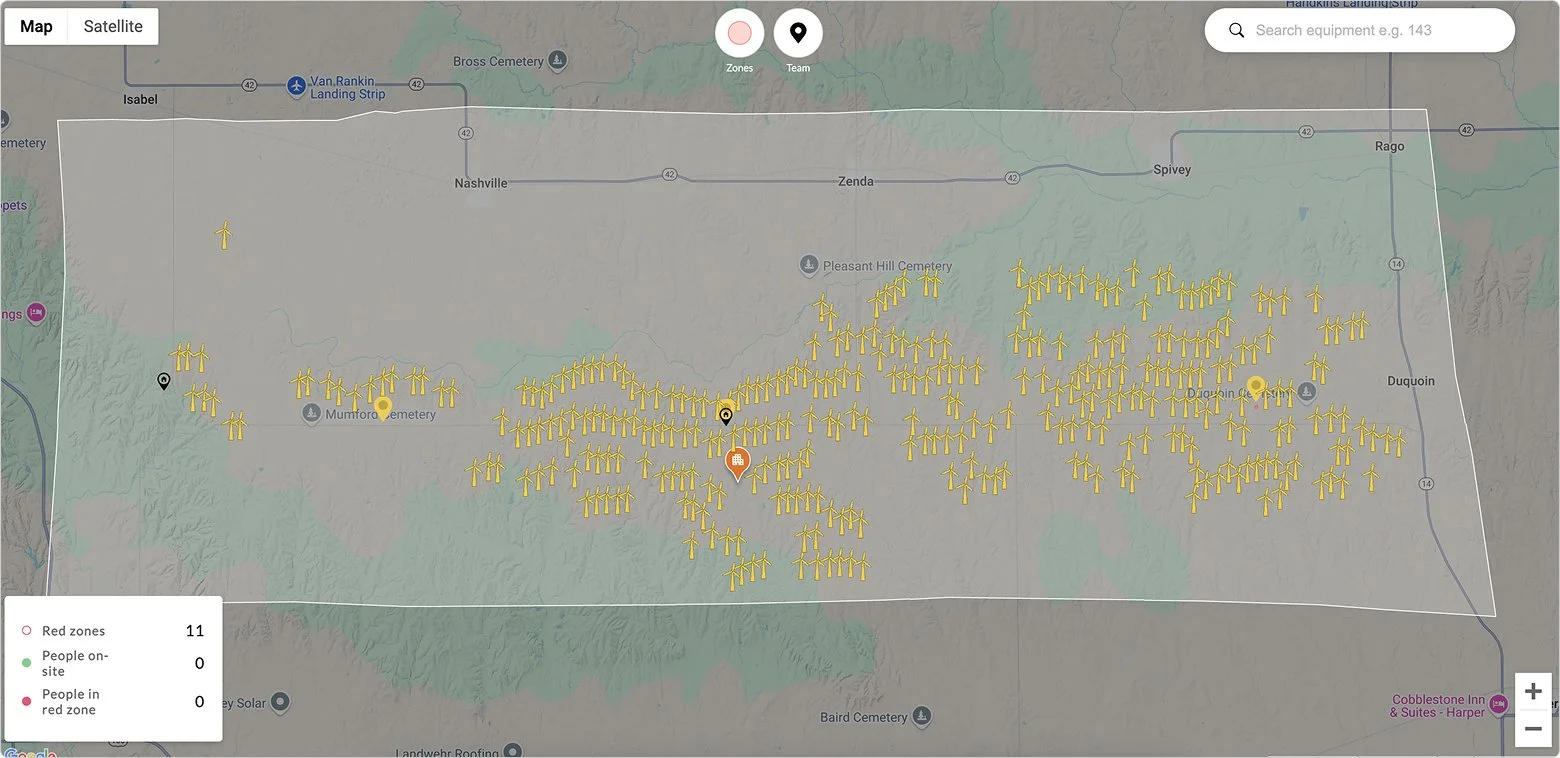
The existing map rendered every asset simultaneously. No hierarchy, no job status, no way to identify hazards at a glance.
How I worked
Field workers in remote locations meant no direct user access. I ran stakeholder workshops with operations managers and safety leads, analysed workflows across deployments to find shared patterns, and prioritised features that strengthened platform foundations over quick customer-specific fixes.
Scaling Navigation Across Customer Types
Each customer deployment had bespoke navigation. Wind needed Certificates for compliance, Retail rolled safety forms into Work, and Aviation had no maps to begin with. This fragmentation made maintaining a structured navigation system between instances complicated.
I designed a modular framework that would work on desktop and mobile: Work, Safety, and Map, as a fixed top-level structure with configurable elements beneath. Work always contains Jobs. Safety stays separate, not aesthetic, but essential, so critical features are never buried when workers need them in the field.
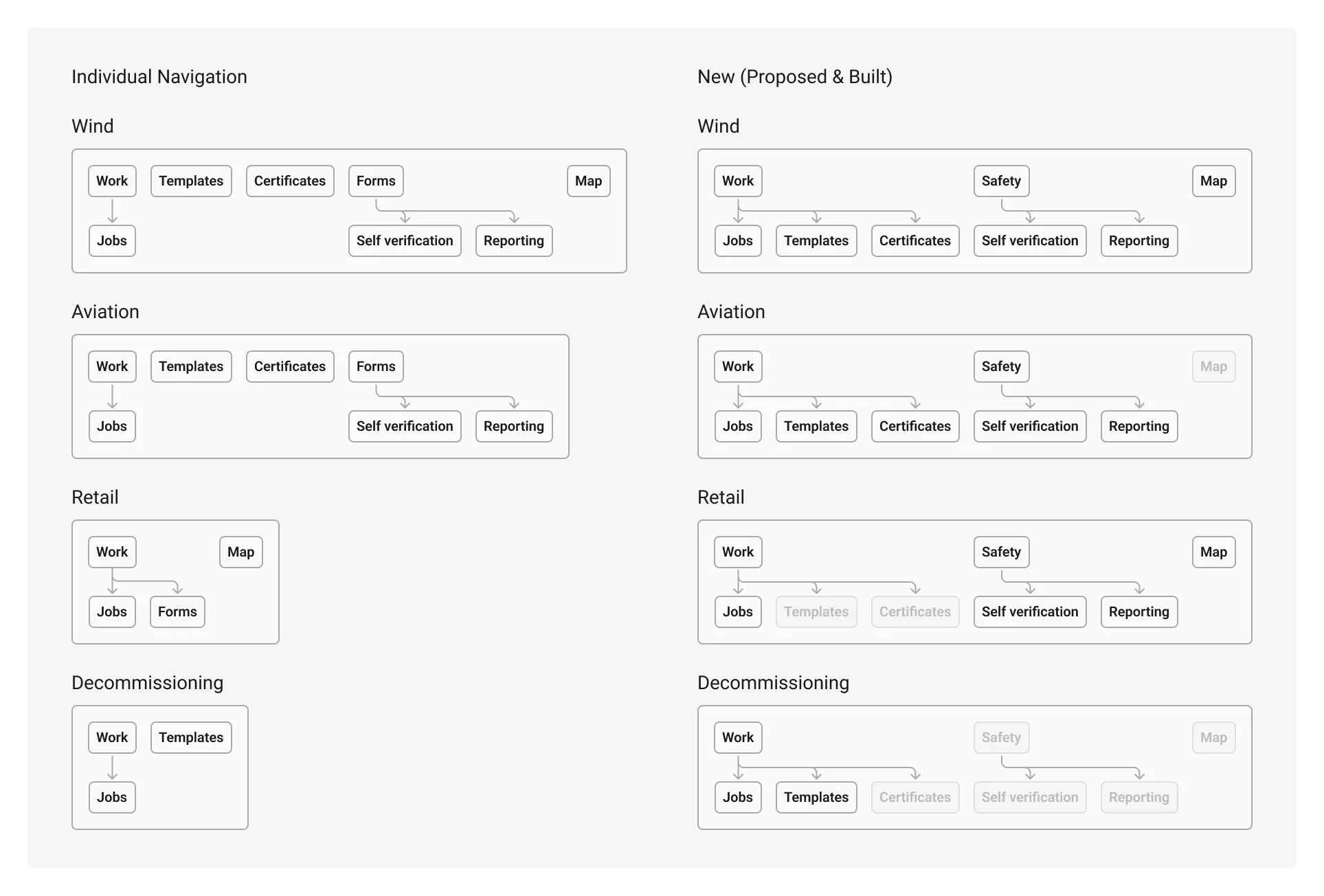
The modular framework eliminated bespoke rebuilds; new customers configure existing patterns rather than building from scratch.
Self-Service Customer Administration
Previously, all user management was handled by Dynamo's internal team, including adding users, configuring shifts, and updating emergency contacts. This created a scalability bottleneck.
I designed a customer-facing admin portal enabling organisations to manage users, roles, permissions, and operational details independently. Customers configure their own hierarchies and workflows, eliminating manual dependencies.
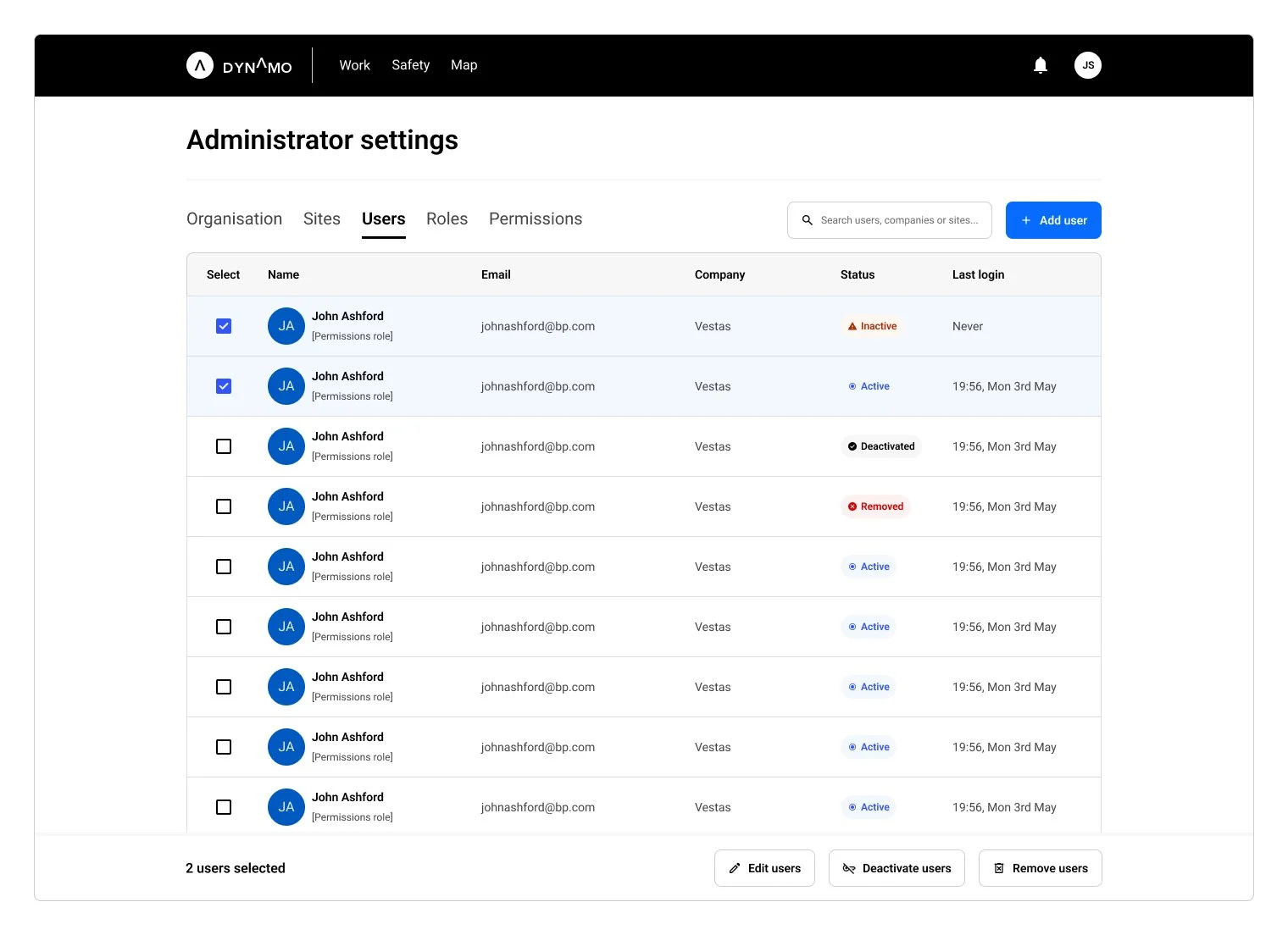
Every user, role, and permission is managed independently. No internal team required.
Situational Awareness
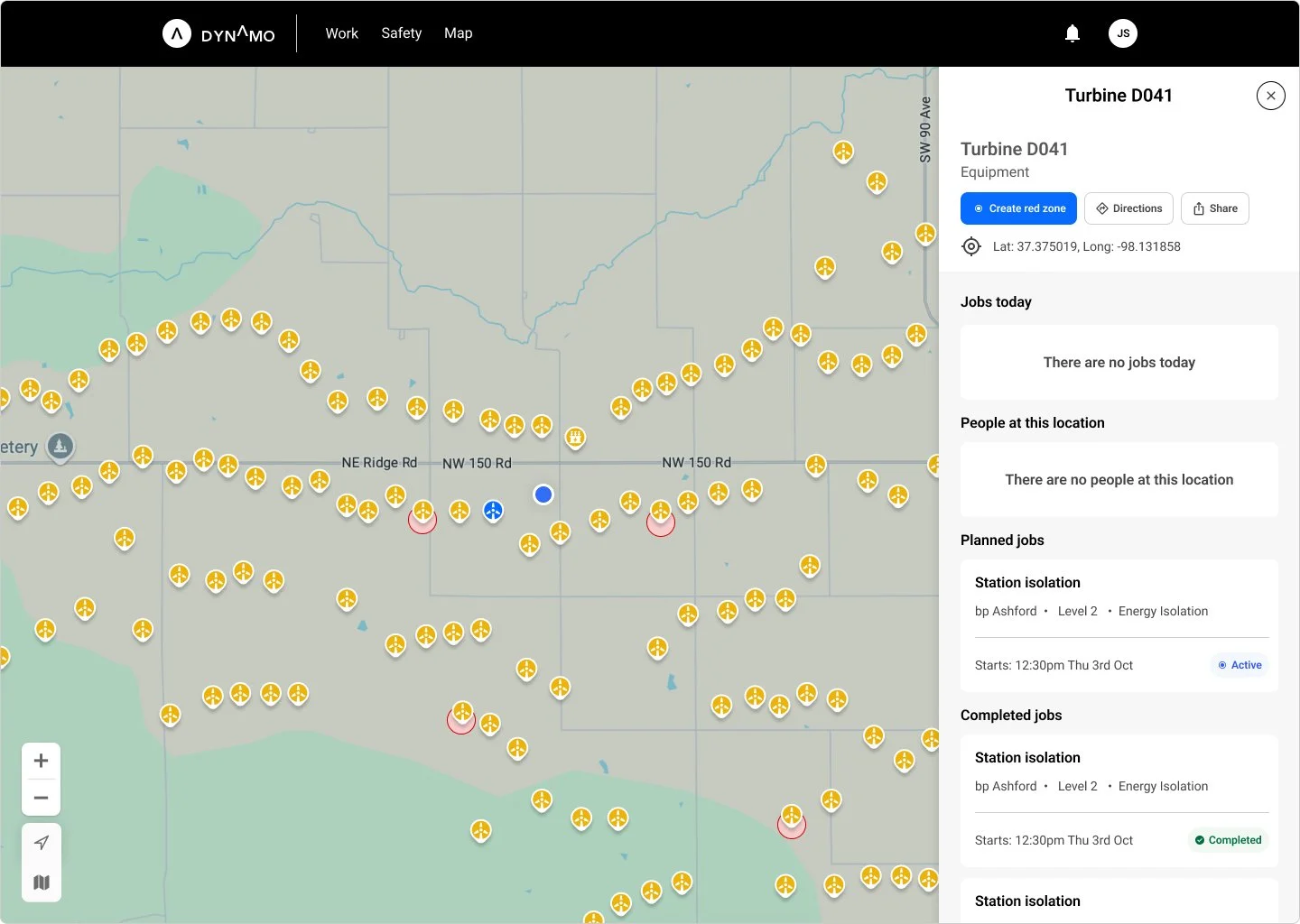
I redesigned maps to work for both HSE managers (desktop, operational overview) and field engineers (mobile, immediate hazards).
Information architecture adapts by zoom level, aggregates data at a distance, and progressively details as you zoom in.
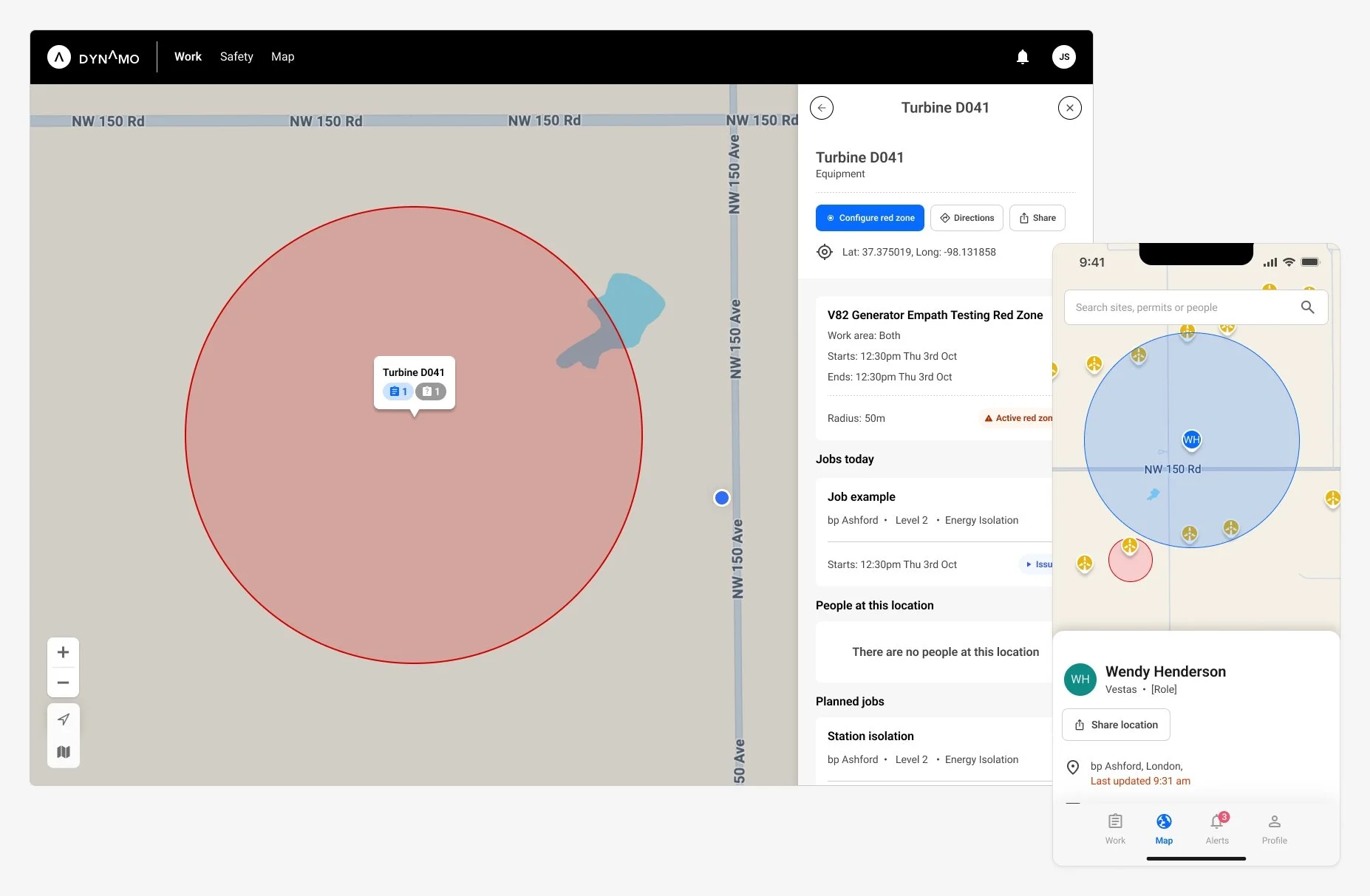
Redesigned to show what matters. Assets, active red zones, and job status are visible at the right level of detail as you zoom in.
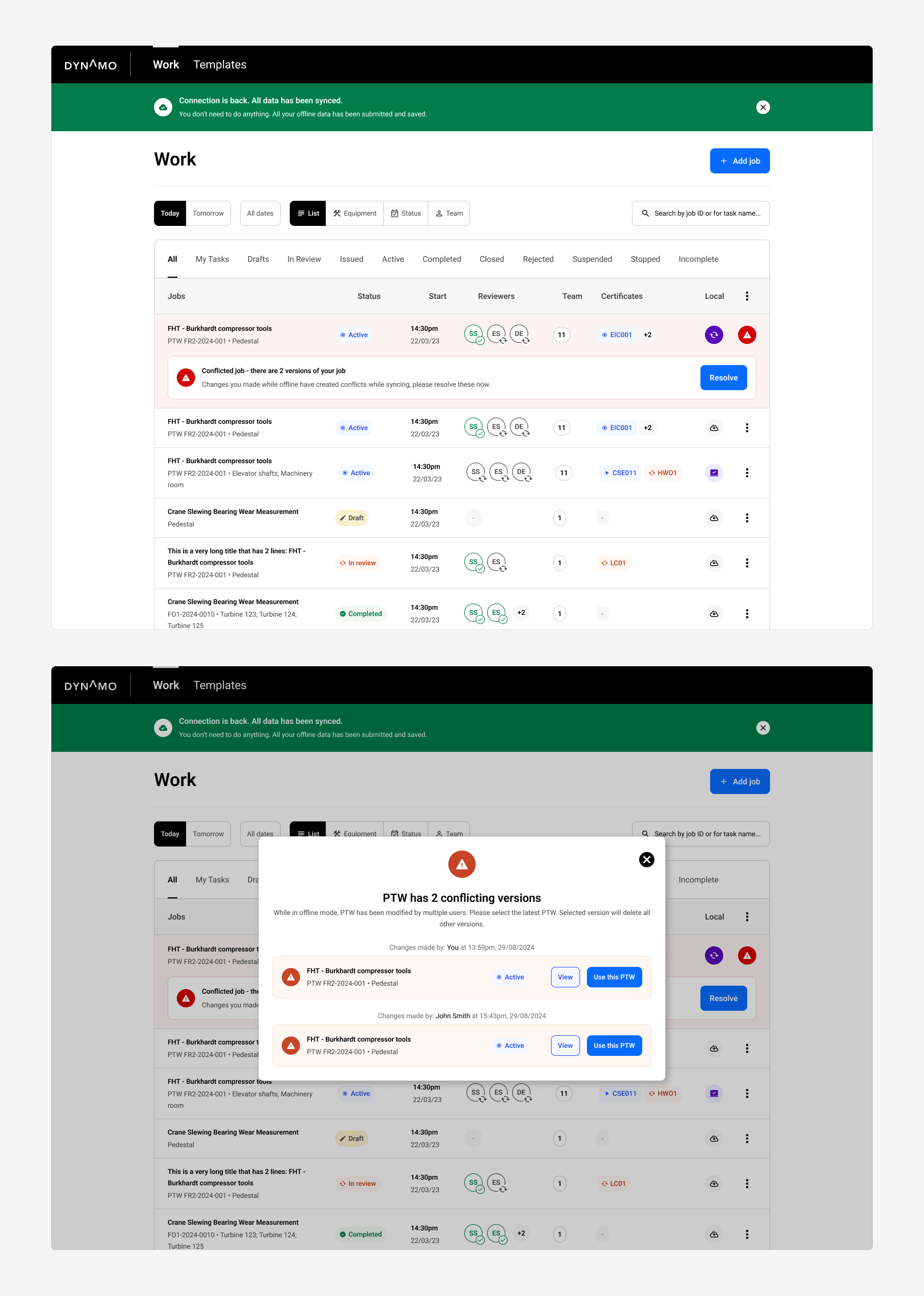
Working Without Connectivity
Shipping operations meant workers on vessels at sea needed to complete permits without connectivity. The feature had to ship to meet contractual deadlines, but full conflict resolution when multiple users edited the same permit offline wasn't technically feasible within timeframe.
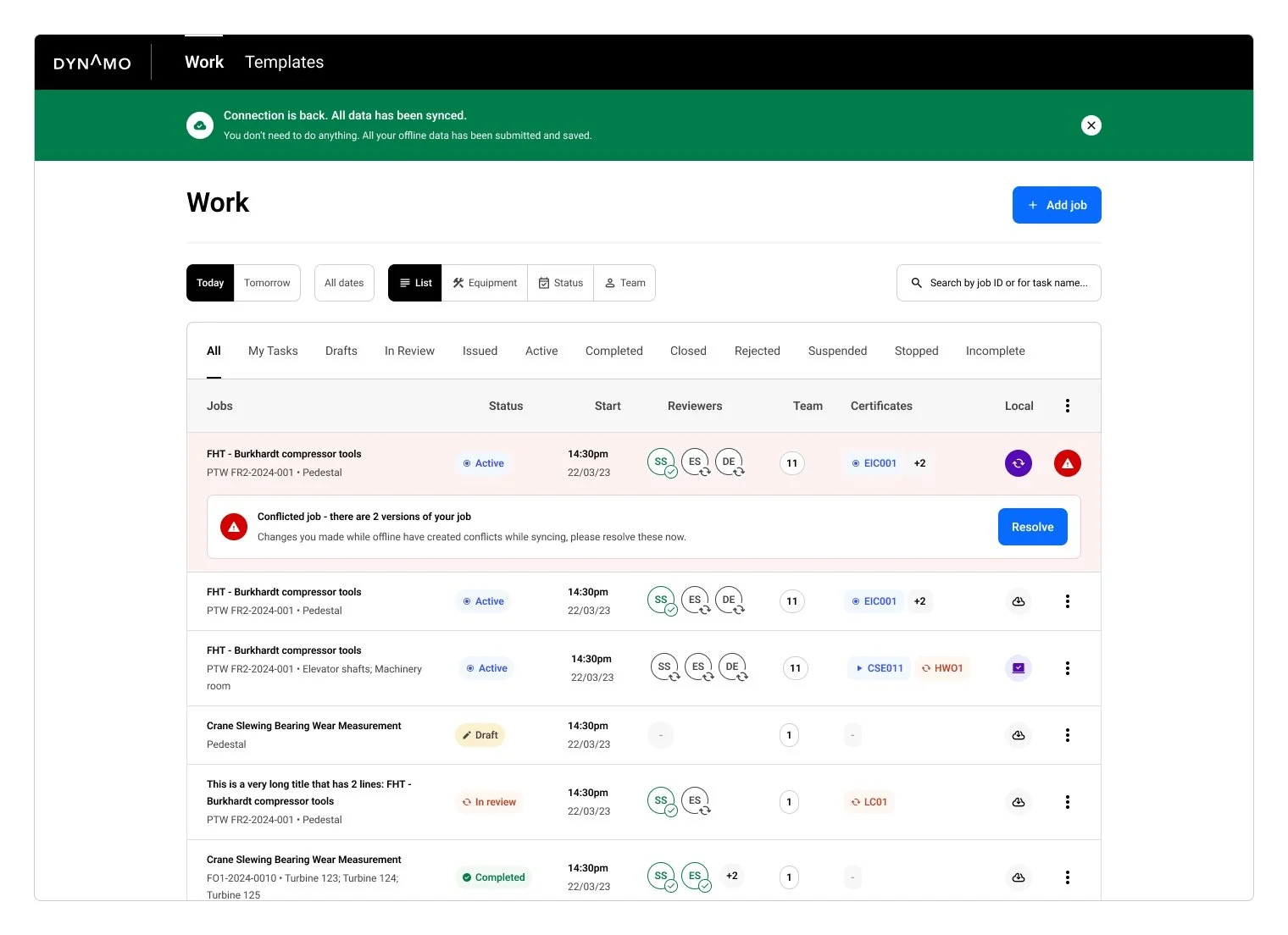
I designed a pragmatic MVP: offline work syncs when connection returns, conflicts flagged for manual resolution. Not perfect, but reliable for remote workers.
Safety-Critical Features
Field workers face genuine hazards, severe weather, equipment failures, and injuries. I designed features that work under pressure: SOS alerts that notify nearby team members and share location information, automated weather warnings from the National Weather Service before conditions deteriorate, and real-time visibility into who's working where.
These are crucial life-safety systems that need to work when it matters most.
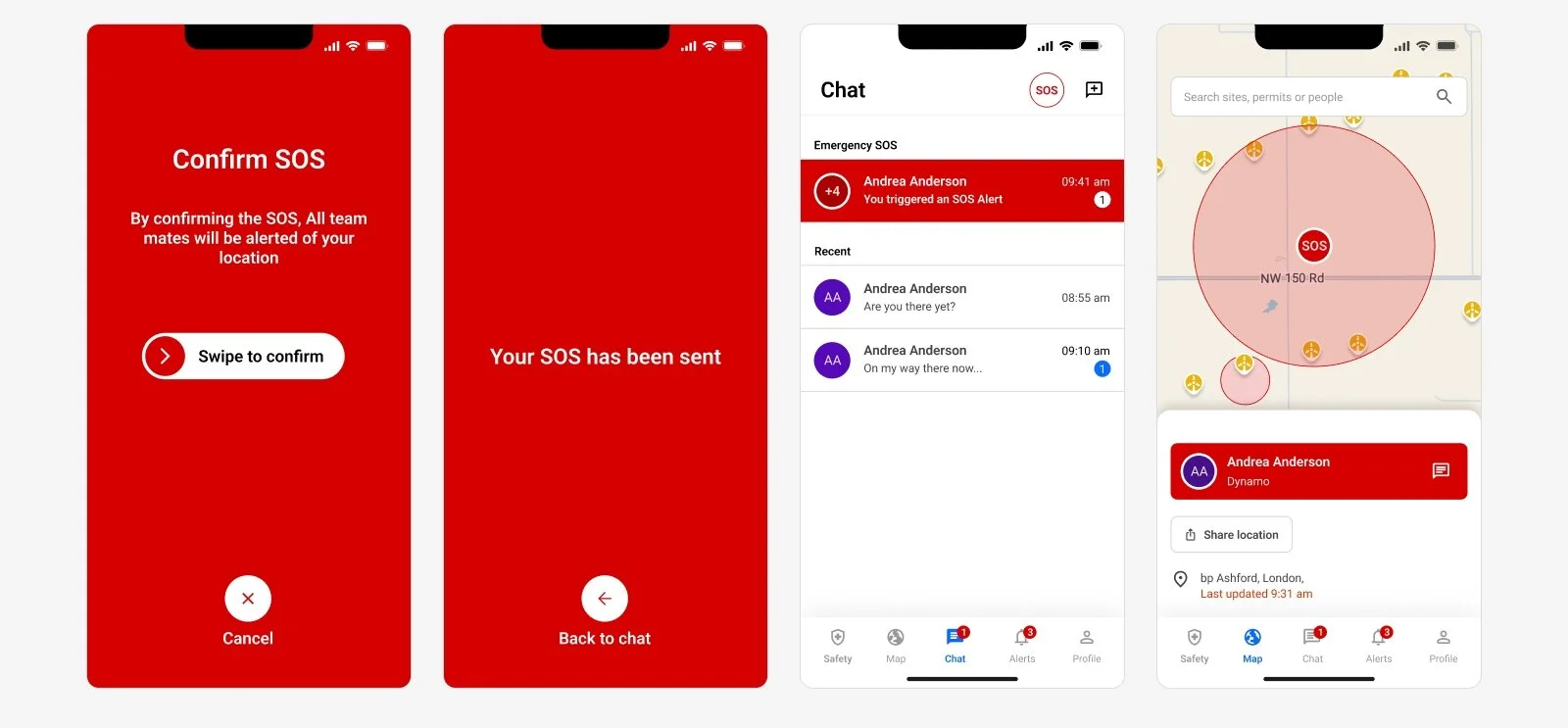
One swipe triggers an emergency response across the team
Outcomes
All features shipped on schedule: self-service admin portal, modular navigation framework, maps, an MVP offline mode, and emergency response systems.
The platform moved from custom builds to configurable deployment. New customers onboard without bespoke development. Customer organisations manage their own users, roles, and operational hierarchies independently, eliminating the scalability bottleneck that existed when I joined.
These foundations worked towards Dynamo's commercialisation strategy. The platform now supports fundamentally different operations, retail, wind, and shipping, through shared architecture and customer-specific configuration rather than fragmented codebases.
What became possible: a safety-critical platform that scales without collapsing under complexity.